
Perfectly Imperfect Holiday Decorating with Kids đŸŽ„

Perfectly Imperfect: Letting Kids Help with Holiday Decorating

The holiday season is a time for joy, togetherness, and creativity. Yet, for many parents and educators, it can also come with the pressure to create a picture-perfect environment. Here’s the good news: perfection isn’t what makes the holidays magical—participation is! Letting kids join in the decorating fun, no matter how “messy” it might get, helps them feel valued, builds important skills, and creates lasting memories.

Why Letting Kids Help Matters

When you allow children to take part in decorating, you’re doing more than giving them a task—you’re giving them an opportunity to learn and grow.

1. Encourages Creativity🖍️

Children see the world with fresh eyes, and their ideas often bring a sense of wonder and fun that adults might overlook. A tree covered in handmade ornaments or garland strung with wild abandon has more personality and heart than any store-bought display.

2. Builds Confidence and Independence

When kids are trusted to help with important tasks like decorating, it sends a powerful message: You are capable. Completing even small decorating jobs helps build their confidence and sense of independence.

3. Teaches Problem-Solving Skills

Deciding where to hang ornaments or how to decorate a gingerbread house involves decision-making and problem-solving. These are critical skills that children can develop through play and participation.

4. Strengthens Family Bonds

Holiday decorating isn’t just about the outcome—it’s about the process. Working together as a family or classroom creates shared memories and strengthens relationships. Kids will remember the laughs and teamwork far more than how perfect the decorations looked.

The Science Behind “Imperfect” Decorating

Child development experts emphasize that children thrive when they’re included in meaningful activities. Participation builds a sense of belonging and accomplishment, which supports emotional well-being.

In fact, studies show that shared activities like decorating or cooking together release oxytocin, the “bonding hormone.” This makes everyone feel more connected, which is the true spirit of the holidays!

Practical Tips for Decorating with Kids

If the idea of letting kids help feels overwhelming, these tips can make the process more enjoyable:

1. Set Realistic Expectations: Embrace imperfection and focus on the experience rather than the outcome.

2. Provide Kid-Friendly Materials: Offer unbreakable ornaments, washable markers, or paper crafts that are easy for little hands to manage.

3. Give Choices: Let children decide where to place decorations or which colors to use.

4. Celebrate Their Work: Show genuine enthusiasm for their efforts, no matter how wacky or “off-theme” they might seem.

5. Make It Fun: Play holiday music, tell stories, or share snacks while you work together.

Letting Go of Perfect

Perfection is overrated—especially when it comes at the cost of shared joy. This holiday season, let your children’s creativity shine. Their crooked ornaments, glitter-covered crafts, and unique ideas will create a home or classroom filled with love, laughter, and holiday spirit.

Remember, the best decorations aren’t flawless—they’re the ones made with tiny hands and big hearts.

Happy decorating!

Mimi’s House

The Literacy Connection

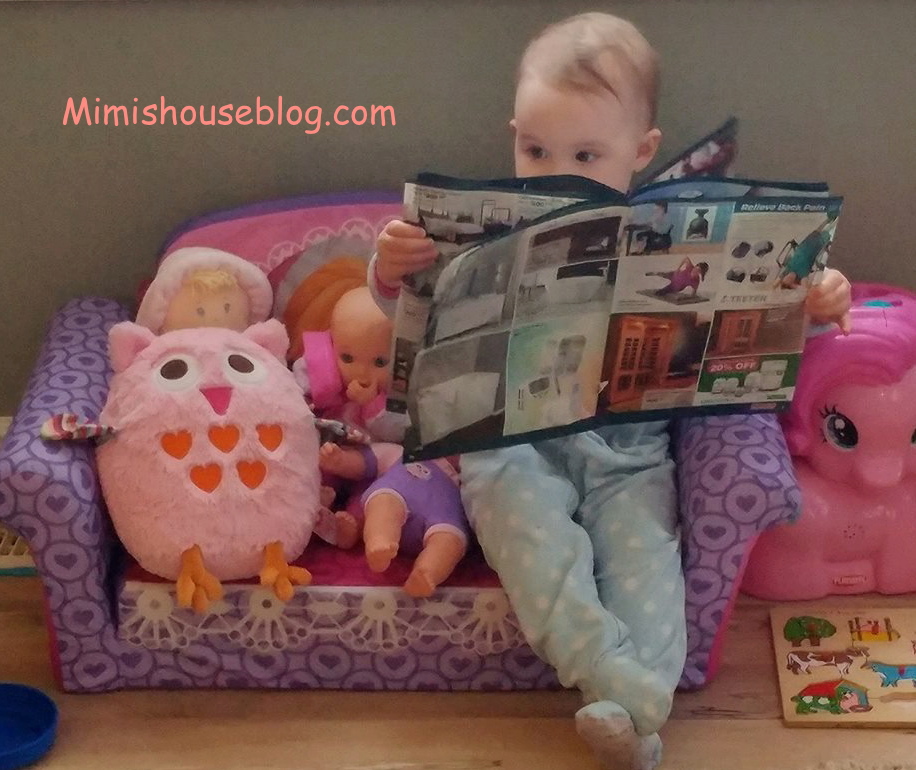
teagan-readingDid you know that 90% of children’s critical brain development occurs by the age of five!
Right from birth a child’s brain begins forming connections rapidly. These connections form the foundation for all of the learning he or she will do later in life.  Studies show that babies and young children who are read to and sung to on a regular basis develop bigger vocabularies and become better readers later in life.

Reading books to children, telling stories, acting out finger plays and singing songs are all crucial in the early years for healthy brain development.  Allowing young children to  become familiar with books, magazines and other print materials also helps to stimulate the brain.

Board books are great for helping toddlers to develop a love for reading. That is because the books are sturdy enough to be used and abused and read over and over again. When my children were young they would carry around their favourite board books until they were practically falling apart. I usually keep a basket of board books in my preschool classrooms as well.  This way the children can use these books in all sorts of play without worrying whether or not they will rip up. Playing house or school is always fun with a book in hand. I love to see my preschoolers pretend to read to one another. They don’t realize it but by engaging in this activity they are building up their dendrites for healthy brain growth.

Another fun activity for young children is to give them old magazines. If they are old enough to use scissors they can cut out pictures, letters and words and glue them onto construction paper for a collage. Younger children might enjoy tearing the pages out or just looking at the pictures like mom or dad.  Having the tangible item to hold, touch and see helps to stimulate the brain.

In the age of technology one might ask, “What about  tablets and e-readers, etc?”  Yes, computers and e-readers are also another way for children to become excited about reading. However I would use this in moderation.  Without the actual physical interaction one loses part of the necessary steps in healthy brain development for the young mind. The computer should never replace the actual interaction between a child and his or her caregiver. Hearing a story read out loud also aids in oral skills and helps to develop a higher vocabulary in young children.

So keep reading and singing aloud to your child. And remember that by allowing young children to hold, touch and feel books you are helping to stimulate healthy brain growth!

Thank you to our adorable model Teagan and to mom Jodi for submitting this cute photo!

Free Play

Image

“For a small child there is no division between playing and learning; between the things he or she does ‘just for fun’ and things that are ‘educational.’ The child learns while living and any part of living that is enjoyable is also play. ~ Penelope Leach (psychologist and author)

Children experience the world around them in awe and wonder.  They learn by observing and imitating which is why play is so crucial in early childhood.  Role playing teaches valuable skills that will help young children as they enter into the school years. Problem solving and reading readiness are just two of the many skills that can be cultivated through pretend play.

I have listed a few simple and frugal ideas for initiating free play with young children. The more freedom a child is given to explore and create on his or her own the more your child will  foster independence and confidence within himself.

Dress Up- Give children some of your old clothes in a laundry basket. They can not only dress up but they can pretend to do laundry.

Boxes- Children love cardboard boxes! Large ones can make houses and cars while smaller boxes can become building blocks. Give children crayons and stickers to decorate them with.

Grocery Store- Empty food containers and bags make excellent grocery store material. Children love pretending to shop.

Play-dough-  Give children cookie cutters and kitchen utensils to create play-dough masterpieces with.  Children can spend hours working with play-dough. Here is my favourite play-dough recipe

Play Dough Recipe:

1 cup white flour
1/2 cup salt
2 tablespoon cream of tartar (find it in the spice section)
1 tablespoon oil
1 cup water
food coloring

Mix first 4 ingredients in a pan. Add water and mix well. Cook over medium heat, stirring constantly, for 3 – 5 minutes. Dough will become difficult to stir and form a “clump”.  Remove from stove and knead for 5 minutes–add food colouring during kneading process. Play dough will keep for a long time stored in a covered plastic container or plastic sandwich bag.

As one can see, opportunities for children to play don’t have to be expensive or complicated. They simply need the encouragement and the time to nurture free play. There are endless way to foster this development in young children. I hope that these few suggestions will spark some ideas for you to create a playful atmosphere in your home or classroom.

Â